Depth of Processing Depth of Processing Depth of Processing Depth of Processing: Movies Depth of Processing: Food and Wine Depth of Processing: Food and Wine Depth of Processing Depth of Processing

Sunday, July 4, 2010

China Motors

This China GM picture is probably a joke, but it is a great image anyway. Don't you love the look on the old man's face and how it is framed by the truck cab.

GM sells more cars in China than in the USA. GM and its joint-ventures sold 1.21 million cars in China through June 30, and it sold 1.08 million cars in the US.

My headline is a little disingenuous, because it includes the SAIC-GM company which GM only owns 1/3 of.

This is interesting because it reinforces that China is huge country, and that countries in the midst of their industrial revolution get huge productivity gains from mechanizing agriculture and shfting labor into manufacturing. Because of the huge population in China, it will be an big fraction of the world economy. GM expects their car sales in China to grow to 3 million.

China's car market grew 46% to 13.6 million to be the largest in the world, as US car sales fell 21% to 10.6 million. Of course the US car sales fall was propelled by the Great Recession.

This reminds me of the Japanese maker Honda who sells more cars in the US than in Japan.


Friday, July 2, 2010

Does Reason Breed Insanity?

G.K. Chesterton
G. K. Chesterton wrote:
Imagination does not breed insanity. Exactly what does breed insanity is reason. Poets do not go mad; but chess-players do. Mathematicians go mad, and cashiers; but creative artists very seldom. I am not, as will be seen, in any sense attacking logic: I only say that this danger does lie in logic, not in imagination.

There is a lot to say about the Chesterton quote in Orthodoxy in the year 1900. First, the whole book is online, and its FREE on the Kindle. Chesterton follows this quote with a discussion on famous insane people as examples.


Second, his book is an orthodox Christian apologetic, so Chesterton is explaining to his peers why it is OK/Good to be Christian, and he feels it necessary to address the poetic reality of Orthodoxy.  


Third, Chesterton's book reminds me of Don Cupitt's idea of Non-realism, that is he understands that his views aren't completely logical, and that is OK. Don Cupitt is a priest in the Church of England. He is about the most liberal theologian one could find. Some consider him an atheist -- me too. There is an interesting interview on this podcast.


I have looked for data on insanity and occupation, and there is little, chiefly work by Norwegian Professor Odegari, and some of these studies are fifty years old. Unfortunately most are in journals not accessible online. I'll post an update if I find something.


Finally, there was a tradition from the beginning of the twentieth century that using your mind more caused more insanity, that is that factory workers or farmers were less likely to go crazy. I view this as elite "brain" workers feeling sorry for themselves. Chesterton was probably echoing this point of view in his book. 


Thursday, July 1, 2010

Unabomber Subject of Sadistic CIA Experiment: Truth is Stranger than Fiction

Police Sketch circa 1983
A terrorist bomber was the subject of sadistic mind control experiments funded by the CIA. Strange as it sounds Theodore Kacynski was the subject of psychological experiments while he was a sophomore at Harvard that were directed at understanding brainwashing and mind-control techniques that be used on enemy soldiers. 


Theodore Kaczynski was an anarchist terrorist from 1978 to 1995 whose weapon was the mail bomb. The bombs were artfully constructed from handmade wood pieces. The FBI and the press called these bombings the Unabomber case, because he initial victims were at universities.


The experiments of Harvard Professor Murray were highlighted in the June 28 episode of RadioLab. This is a detailed account of Kacynski's mental history.

Murray subjected his unwitting students, including Kaczynski, to intensive interrogation -- what Murray himself called "vehement, sweeping, and personally abusive" attacks, assaulting his subjects' egos and most-cherished ideals and beliefs.

He video taped the interrogations and then played back recordings of the students being humiliated over-and-over again for them to watch.

In fairness, Murray's research was a part of a much larger effort to assemble a tremendously through understanding of the study group through deep and wide ranging psychological and sociological tests. The sadistic testing described above was supplemented by hundreds of hours of other tests. The video playbacks were thought to allow self-knowledge within the participants rather than create emotional scars. 

This is so much like Robert Ludlem's Borne trilogy of a mind-controlled soldier who snaps and turns on his handlers.  One can only guess what Kaczynski's life would have been like without the psychological experiments. Is it possible the CIA unwittingly created a social misfit who morphed into a bomber? Yes.

Sunday, June 27, 2010

Detroit Downriver Housing Prices UP 22%, Who Knew?

In 2010 I hear black humor frets about how much money we have lost on our houses.

Happily and surprisingly, 2010 May house prices Downriver have gone up by 22.4% in the last twelve months, from $60,777 to $74,426.

Obviously housing downriver continues to be affordable. It might not actually be the prices that are going up, it could be that larger houses are selling better than small ones.

If you graph it out, it is not quite so optimistic. The Michigan Realtors measure of sale price jumps around a great deal. On the other hand, 2010 as been over 2009 for 4 of the past 5 months. This means it is not getting worse.

Friday, June 25, 2010

Watson: the Amazing IBM Question Answering Computer

IBM built a computer that can play Jeopardy! against human players.


It can figure out the question, even unusual questions with puns in them, and often give the right answer, and do it fast enough to beat good human Jeopardy! players.

This is interesting because if it can do this, it can do most any data retrieval chore. For example, it can argue with you about your phone bill, or perhaps give you emergency medical advice, or tell you what product you should buy.

It is also interesting because of the huge programing accomplishment that it took to do this. The Watson coders correlated language with millions of words of scanned text, and built its own dictionary from that. The relationships are the program. Watson has read the Bible, encyclopedias, dictionaries and literature.

Watson has been around a while it was only answering 15% correct in 2006. It was beating human players in 2008, and can beat champion players today. It used the six seconds during while the question is read for a head start.

Watson is an implementation of DeepQA which runs on a BlueGene IBM computer. BlueGen computers are massively parallel supercomputers, with computers-on-a-chip at each node.  (See my post on BlueBrain which also runs on BlueGene computers.)

Watson is not aware in the sense that a human being feels aware. Its software cannot sense awareness or anything like that. It does not know why it plays Jeopardy! or why it wants to. In this sense it is not sentient.

On the other hand Douglas Hofsteadtler, author of Goedel, Escher, Bach, and Strange Loop argues that sentience is an illusion that our brain feels.

Similarly, many believe that the Mind is a giant interior dialog we carry on with ourselves. If this computer answers questions, could it answer its own questions? Probably not -- it is not made that way. The designers would need to start over. This question answering machine could not ask a question any better than the airline reservation computer could.

Tuesday, June 22, 2010

Music Review for Zola Jesus Deserves Note

Zola Jesus (aka Nika Danalova)
Some of you know that son Nick plays in a band for Zola Jesus. I was reading a review of last Saturday's performance, where I came across some really remarkable writing by Julianne Escobedo Shepherd in a review in Fader .


"Nowhere was this most apparent than show-closer “Night,” the stricken, gorgeous plea that’s probably soundtracked a thousand illicit make-outs and maybe six or seven break-ups. She sounded like some kind of precious eagle flying through a canyon, strong and steadfast, harmonizing with her keyboardist in tragic minor keys. This woman’s voice doesn’t falter—no sour notes, no half-pitch slips—and with the high drama of marching drums and that crazy cloud sculpture, it felt like we were all following her into a magical cotton cave, where we’d form a cuddle puddle and everything would be weirdly, tragically okay."


I wonder if Julianne writes novels or maybe poetry.  


Friday, June 18, 2010

Secret Gulf Oil Dispersant Finally Revealled - Corexit Composition Published

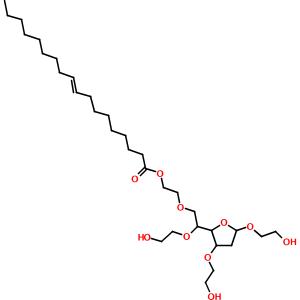
BP has been using Corexit 9500 and 9527 ever since the beginning -- even though the government told them to switch. The composition has been the subject of speculation on my blog (31May) (23May) and elsewhere, but the EPA has finally published the composition. The difference  between the two was supposed to be the solvent butoxy ethanol or EB, but it seems the actual difference is the ratio of ingredients.


CAS Registry NumberChemical Name
57-55-6
1,2-Propanediol
111-76-2
Ethanol, 2-butoxy-*
577-11-7
Butanedioic acid, 2-sulfo-, 1,4-bis(2-ethylhexyl) ester, sodium salt (1:1)
1338-43-8
Sorbitan, mono-(9Z)-9-octadecenoate
9005-65-6
Sorbitan, mono-(9Z)-9-octadecenoate, poly(oxy-1,2-ethanediyl) derivs.
9005-70-3
Sorbitan, tri-(9Z)-9-octadecenoate, poly(oxy-1,2-ethanediyl) derivs
29911-28-2
2-Propanol, 1-(2-butoxy-1-methylethoxy)-
64742-47-8
Distillates (petroleum), hydrotreated light
*Note: This chemical component (Ethanol, 2-butoxy-) is not included in the composition of COREXIT 9500.
Learn more about CAS Registry Numbers from the American Chemical Society  
The highlights are that there are three deterents, and there are three solvents including one petroleum distillate, a ethylene glycol derivative and a propylene glycol derivative.

My previous post is here. My original oil field dispersant post is here.

A good site for the BP spill chemistry is the Facebook group Project Tantalus.
Span 80 = Sorbitan Oleate = 1338-43-8

||MSDS for Span 80.||
It is also called sorbitan monooleate. It is used in foods including ice cream and pickles.

Span 80 is a weak non-ionic surfactant with an HLB of 4.3 (low), and would be useful in emulsifying water into oil.


Polysorbitan 80 = 9005-65-6
                      ||An MSDS for Polysorbitan 80|| Polysorbate 80 is routinely used in foods especially ice cream, and in medicine including flu vaccine.

Polysorbate or Polysorbitan 80 has an HLB of 14, which is relatively high for a non-ionic surfactant.


Tween 85 = polyethyleneoxide sorbitan trioleate = 9005-70-3
||Tween 85 MSDS here.||
It is also called polyethylene glycol sorbitan trioleate, or polysorbate 85. 
This has an HLB of 11, which is intermediate. This is a large surfactant, which means it gives long term stability, but may not be as fast acting. 

Wednesday, June 16, 2010

How Much Money Does a Musician Make on ITunes?

Apple accounts for 28% of the US music market, and MP3 downloads on Amazon add another 12% -- making it 40% -- still a minority, but it is just two companies.

The financial split between the musician and Apple has never been quite public. Appleinsider thinks that
big labels get a better deal at 70% of revenue and that independents get 60%. The owner of the copyright gets 9%, and this is from the label's cut.  This 70% number is floated a lot, but without good documentation, for example.

Deals between acts and labels vary, but perhaps the label will probably keep half, so the act gets 35%, and the act needs to pay the copyright from that, or 10%. The net could be 25% or $0.25 on a $0.99 song for the artist.

Let's say that I want to make $20/hr on a song that took three people two weeks to make or 240 hours. I would need to make $4800 for this type of wage. Let's say my label took 50%, then I would need to sell 13700 copies to earn $20 per hour.

There are 6-8 million songs on iTunes, and they have sold 10 billion songs. This means that average song has been downloaded 1400 times. However, some songs have been downloaded far out-of-proportion -- millions of times, and some have never been downloaded.

A song would need to be downloaded ten times more than the average in order to make a $20/hr return to its creators. The return would be better if the recording were self-published, perhaps six times instead of ten.

--------------------------See the new update post from October 2010 --------------------------

Sunday, June 13, 2010

Body Worlds and Plasticization of Animal and Plant Tissue

I went to see Body Worlds at the Museum of Science and Technology in Denver. I enjoyed the exhibit because it was so substantive and artistic. I really liked the skaters at right. I was also impressed because I could not see that it was supported by strings. I can't believe that the skaters would never fall. I had seen Bodies The Exhibition, but it was inferior.

Body Worlds is a creepy exhibit because, obviously, there are all these dead bodies around, but unlike Halloween they brightly lit and partially dissected. The exhibit gives a lot to think about, medicine, biology, marketing, sport, sex, and death.

Body Worlds is controversial because of the corpses, and because visitors need to deal with their unresolved issues.

To avoid writing a posting on sex and death, I am going to take on the friendlier topic of "What is Plasticination?" "Plasticination" is a embalming technique wherein fat is extracted away, and a plastic is vacuum-impregnated into the tissue. It is the way Body Worlds' producers stabilize the corpses for display.

Originator, Guenter van Haegens sells stabilization products through a company called Biodur.   Here is the selection guide and the catalog.  He sells epoxies for thin slices, polyesters for transparent slices like for microscopy or for brains, and a polymerizing emulsion "PEM" for thick opaque body sections. Some of the silicones are cured with gas phase crosslinkers, probably amines. The polyesters are cured by ultraviolet light, so they must be acrylic functional.
Guenter van Haegens
Founder of Body Worlds with his
flashy hat

It is hard to tell what the PEM are because they are described as "duromers" that "emulgate." A "duromer" is some variety of thermoset polymer. "Emulgate" seems to mean phase separate upon curing. I supposed that the polymer drops out of solution as the polymerization continues. PEM are heat cured.

His patent US 4,278,701 covers several types of polymer including silicones epoxies, silicones and thermoset polyesters. Patent 4,205,055 is substantially the same with different infusion and penetration techniques. He describes peroxide and diazo initiated methacrylates in this patent. Both these patents are expired.

It is easy to see how small samples could be prepared. It is amazing to me that such large assemblies could be made without visible screws and wires. One would have to arrange them before setting the plastic. I am also impressed that there was no odor at all.

I think each display was made up of individual pieces that were later put together in a pains-taking detailed-oriented fashion. I suspect that there are a fair number of simulated body parts to make it look better. I wonder how often several individuals are combined in Frankenstein fashion to make on display model -- probably most of the time.

Sunday, June 6, 2010

Images of Jesus

I was prepping my last post, and I was looking for a 1970's era sketch of Jesus that showed him a square jaw and bulked up dimensions, but no luck

I did find some interesting pictures of Jesus, primarily this site, which I recommend. The Wikipedia page is also good.

I find these images of Jesus fascinating to look at because they say a lot about the artist and the kind of Jesus he wanted/imagined/was inspired by.

The one at right is a nice modern Jesus. He is pretty filled out, I don't think he has skipped many meals. Dramatic with movie-set lighting.
 This Jesus is a more spiritual, mystical Jesus. He does not have a context, but floats in space.

This next Jesus is "Buddy Christ," from the movie Dogma. I think it is funny every time I see it. Of course it is a parody, not a serious image of God.

I love Buddy Christ because it looks like what an advertising agency would do with Jesus if he were marketed like detergent.


This is from the Spanish (originally Greek) artist El Greco, who is one of my favorite artists. It is from about 1580.

I love the dramatic style.

In 1580, Jesus did not look well fed and strong.


Like this post?  See part 2.